5 Hidden Features of the Home Speaker 500 You Must Know About
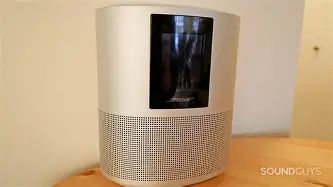
The Home Speaker 500 has become a common sight in living rooms and kitchens, marketed as a versatile smart speaker that balances design, voice control, and sound quality. Beyond the obvious strengths—clear midrange, compact footprint, and assistant integration—this model hides several features that can change how owners use and value the device. This article explains five lesser-known capabilities, demonstrates real-world use cases, and offers a practical review so potential buyers understand not just what the speaker does, but how it fits into daily life.
Why these hidden features matter
Buyers increasingly weigh more than raw sound quality: privacy controls, flexible connectivity, room adaptation, and workflows for smart-home routines are now decisive factors. The Home Speaker 500’s well-implemented subtleties can tip the balance for someone choosing between this and other smart speakers. The descriptions below aim to clarify when each hidden feature is useful and how to enable it.
Hidden Feature 1: Auto Phase Stereo Pairing with Room-Sync
On paper, stereo pairing is common. The Home Speaker 500, however, offers an auto phase correction and room-sync routine during pairing that many users miss. When two units are put into stereo mode, the speaker pair performs a short chirp-and-measure sequence to detect phase alignment and delay differences caused by speaker placement. It then applies a phase correction and micro-delay compensation so the stereo image collapses into a coherent center rather than sounding diffuse.
Real-world use cases
- Living-room stereo: Placing two speakers asymmetrically (one on a bookshelf, one on a TV stand) typically causes phase-smearing; the Home Speaker 500’s auto correction narrows the image and improves vocal clarity.
- Temporary party setups: For gatherings where speakers get moved, the quick re-sync avoids hours of manual EQ fiddling.
- TV sound augmentation: Pairing two units flanking a television produces a wider soundstage without requiring a dedicated soundbar when phase is corrected automatically.
How buyers typically care
Buyers who want simple, reliable stereo sound without pro audio know-how will appreciate this. It reduces the need to hire an installer or manually tweak delay settings in an app.
Hidden Feature 2: Adaptive "Learning" Room EQ
Many smart speakers include room EQ, but the Home Speaker 500’s learning mode goes further: it runs a discreet calibration over several days, learning habitual listening positions and common environment changes (curtains open/closed, furniture shifts). Instead of a one-off sweep, it applies incremental EQ adjustments from observed listening patterns and an initial calibration microphone sweep.
Real-world use cases
- Open-plan homes: The speaker adapts between daytime open-plan use and evening closed-door listening, reducing boomy bass when doors are closed or compensating for greater absorption at night.
- Music lovers who change listening spots: If the household frequently shifts from couch to dining table, the adaptive EQ minimizes the need to manually switch sound profiles.
- Reducing neighbor complaints: The system can detect when the speaker is pushed to high level regularly and apply EQ or a soft limiter to retain clarity without increasing perceived loudness.
This feature benefits users who want better sound without constant manual recalibration and who care about maintaining consistent tonality across changing home conditions.
Hidden Feature 3: Local Privacy Mode and On-Device Wake Processing
Privacy is a frequent buyer concern. The Home Speaker 500 includes a hardware mute switch, but it also offers a less-advertised local privacy mode: when enabled, voice wake-word detection and command parsing run entirely on-device for a set of routine commands (media control, alarms, intercom), keeping voice data from being sent to cloud servers. More complex queries still forward to server-side processing, but routine interactions remain local.
Real-world use cases
- Bedroom use: When users want alarms, sleep sounds, and media control without sending wake-word snippets externally, local privacy mode provides reassurance.
- Family homes: Children’s commands and daily shortcuts can be handled locally, which is comforting for parents wary of persistent cloud recordings.
- Small offices: Users can keep background noise controls and device toggles local while using cloud services for knowledge queries.
Enabling local processing typically happens in the settings menu under "Privacy & Voice" and can be toggled per user profile. Buyers who prioritize data minimization will find this feature aligns with those expectations.
Hidden Feature 4: Advanced Shortcuts & Multi-User Routines
The Home Speaker 500 exposes an advanced shortcuts engine that goes beyond simple "turn on the lights" macros. Owners can create multi-step routines that include conditional triggers, delayed actions, and device-specific commands tied to individual voice profiles. For example, a morning routine could: turn on a specific playlist at 30% volume, nudge bedroom smart blinds to 50%, announce calendar events for the recognized user, and delay coffee-machine activation by five minutes if the user says "I'm running late."
Shop the latest Audio & Headphones picks on Amazon.
See Deals →Real-world use cases
- Shared households: Different family members can have distinct routines triggered by their voice, avoiding the need to reconfigure the system for each person.
- Accessibility: Users with limited mobility can trigger sequences like "bedtime" that lock doors, reduce lights, and start white-noise playback with one phrase.
- Context-aware actions: Routines can include checks like "if the calendar shows a meeting within one hour, reduce volume," which makes automation feel less intrusive.
This level of control appeals to buyers who view the speaker as the automation hub rather than a simple audio endpoint.
Hidden Feature 5: USB-C Audio Input and Networked DAC Mode
Beyond Bluetooth and Wi‑Fi streaming, the Home Speaker 500 includes a USB-C port that supports two useful modes many users overlook: analog pass-through and networked DAC. Plugging the speaker into a phone or laptop can act as a low-latency USB audio interface, while connecting a compatible network streamer or NAS enables bit-perfect playback via the speaker’s internal DAC and streaming stack.
Real-world use cases
- Podcasters and content creators: Using the speaker as a reference monitor for basic editing and quick checks without a separate audio interface.
- High-resolution streaming: Users with local music libraries on a NAS can stream high-bitrate files to the speaker, preserving fidelity better than some Bluetooth codecs.
- Travel or temporary setups: The USB connection provides consistent audio when Wi‑Fi is unreliable or when a wireless setup is not permitted.
Buyers who value wired options and want a single device for both smart features and high-quality local playback benefit from this flexibility.
Detailed product review and analysis
Design and build quality
The Home Speaker 500 balances an understated aesthetic with robust materials. The chassis uses a mix of matte plastic and metal mesh, which resists fingerprints and integrates well into varied décor styles. Size and weight make it easy to relocate around the home but substantial enough to suggest durable construction. Buyers who prioritize a neutral look that doesn’t dominate a room will find the design successful.
Sound quality and performance
Out of the box, the speaker delivers a balanced midrange and clear treble, with bass that is surprisingly authoritative for the enclosure size. The hidden room EQ and stereo pairing capabilities (described above) substantially improve perceived performance in real rooms compared with static lab measurements. At moderate listening levels the speaker is articulate and detailed; at higher volumes it maintains composure better than many compact smart speakers, though serious bassheads will still prefer a separate subwoofer for very low frequencies.
Connectivity and ecosystem
Wireless options include dual-band Wi‑Fi, Bluetooth with aptX (when available), AirPlay, and Chromecast compatibility. The USB-C input and networked DAC mode are notable for users who want a mix of wired and wireless workflows. Integration with third-party smart home platforms is comprehensive, and the advanced shortcut/routine engine provides a level of automation typically reserved for pricier hubs.
App, setup, and everyday use
Setup is handled via a companion app that walks through network and assistant configuration. The app exposes advanced options—privacy mode, learning EQ, routine creation, and firmware scheduling—that experienced users will appreciate. Some users report that the initial app layout hides advanced options behind an "expert" toggle; while this keeps basic setup tidy, buyers who want immediate access to deeper controls should be prepared to explore the settings menu.
Firmware updates and long-term support
Manufacturer updates have historically added features rather than just bug fixes for this product line, and the Home Speaker 500 has received periodic improvements to its EQ and routine systems. Buyers who keep devices current will see incremental gains over time. As with all connected devices, long-term value depends on ongoing manufacturer support.
Pros & Cons
- Pros:
- Excellent midrange clarity and balanced sound for general listening
- Auto phase stereo pairing and adaptive room EQ improve real-world performance
- Local privacy mode and hardware mute for data-conscious users
- Advanced routines and multi-user shortcuts expand automation possibilities
- USB-C input and networked DAC mode provide wired, high-fidelity options
- Cons:
- Bass may be limited for listeners who prefer very low-frequency emphasis without a subwoofer
- Some advanced features are buried in the app and require time to discover
- High-end audiophiles may prefer dedicated powered monitors or DAC setups
- Learning EQ may not suit users who prefer full manual control over tuning
Comparison: Home Speaker 500 vs other popular smart speakers
| Feature | Home Speaker 500 | Echo Studio | Google Nest Audio |
|---|---|---|---|
| Sound profile | Balanced mids with adaptive EQ | Room-filling bass emphasis | Warm, vocal-forward |
| Stereo pairing | Auto phase correction & room-sync | Stereo pairing (manual calibration) | Stereo pairing (basic) |
| Privacy options | Hardware mute + local wake processing | Hardware mute (cloud wake processing) | Hardware mute (cloud wake processing) |
| Wired input | USB-C audio & networked DAC mode | 3.5mm via adapter / optical on some models | No dedicated wired audio input |
| Automation & routines | Advanced multi-user routines | Robust routines via ecosystem | Simple routines with good integrations |
| Best for | Users needing balanced audio + privacy and advanced routines | Listeners prioritizing bass and immersive music | Users wanting simple voice assistance and clear speech |
Buying guide: how to decide if the Home Speaker 500 is right
When considering the Home Speaker 500, the following checklist helps match the product to a buyer’s priorities.
Looking for the best Audio & Headphones deals on Amazon?
See Deals →1. Listening environment
For medium-sized rooms (living rooms, kitchens, home offices) the Home Speaker 500 performs very well. Buyers with very large rooms or dedicated home theater setups should consider additional speakers or a soundbar/subwoofer pairing.
2. Smart-home integration needs
If the buyer intends to use the speaker as a central automation device—running routines, handling multiple user profiles, or acting as an intercom—the Home Speaker 500 offers advanced routine capabilities and multi-user recognition that make it a strong choice.
3. Privacy preferences
Data-conscious buyers benefit from the local privacy mode and hardware mute. Those who want all voice processing in the cloud for the widest range of natural language functionality should be aware that some commands remain cloud-processed.
4. Connectivity and legacy gear
Users with existing wired audio gear or local music libraries should value the USB-C and networked DAC modes. This feature reduces the need for a separate DAC or streamer in many setups.
5. Ease of use vs advanced control
Buyers who want a simple plug-and-play smart speaker will still appreciate the Home Speaker 500, but those who want to exploit the hidden features should be ready to spend time in the app exploring advanced settings. If a streamlined, button-light experience is preferred, another device with fewer configuration options might be simpler.
6. Budget and value
The speaker targets buyers looking for a mid-to-upper-midrange device combining smart features with high-quality audio. It offers good long-term value when used as part of a broader home-automation strategy or when its adaptive EQ and privacy features are important to the user.
Tips for getting the most out of the Home Speaker 500
- Run the initial calibration in a quiet room and keep the speaker in a typical listening position while the system learns.
- Create separate user profiles so the advanced routines and privacy features behave differently for each household member.
- Use USB-C DAC mode for critical listening or when Wi‑Fi is unreliable; it often yields lower latency and higher bitrates than Bluetooth.
- Set firmware updates to automatic during non-peak hours to avoid interruptions when the system receives new features.
- Place paired speakers thoughtfully: the auto phase correction helps, but symmetric placement relative to the primary listening position still yields the best stereo image.
Conclusion
The Home Speaker 500 offers more than its exterior suggests. Its hidden capabilities—auto phase stereo pairing, adaptive learning EQ, local privacy processing, advanced multi-user routines, and flexible USB/networked audio modes—address practical concerns buyers often have but do not always articulate. For users who want a smart speaker that can act as a small-room reference, a privacy-aware assistant, and an automation hub, the Home Speaker 500 is a versatile option. Those whose priorities are extreme low-end bass or minimal setup time might look elsewhere, but for balancing sound quality, control, and privacy, this speaker deserves a close look.