Ear A Truly Wireless First Look: Unboxing and Impressions
Introduction
Truly wireless earbuds have matured from a novelty into everyday equipment. For many buyers, the checklist is now familiar: stable Bluetooth, comfortable long-wear fit, dependable microphone quality for calls, effective noise control for commuting, and a tuning that suits both music and spoken audio. “Ear A Truly Wireless” enters this crowded landscape with the promise of modern essentials in a compact, pocketable format—aimed at people who want a set of earbuds that can move seamlessly from laptop meetings to gym sessions to late-night listening.
This first-look article focuses on the immediate experience: what it’s like to unbox Ear A, how the design and ergonomics present in the hand and ear, and what early listening and real-world use reveal about strengths and trade-offs. The goal is to help typical buyers understand what matters most in day-to-day use, what to look for in the first week of ownership, and how to decide whether Ear A fits their priorities.
Unboxing: What’s in the Box and What It Suggests
The unboxing experience often reveals the product’s priorities. Packaging and accessories can hint at whether a product is intended for travel, fitness, work calls, or more audiophile-leaning listening. Ear A’s presentation emphasizes compactness and quick start: the core essentials are easy to find and set up without a lot of paperwork or unnecessary inserts.
Typical contents and why they matter
Most truly wireless earbuds ship with a familiar set of items, and Ear A follows that general pattern. Buyers should expect the main pieces that influence daily usability:
- Charging case and earbuds: The case design determines pocketability, one-hand opening, and how confidently the earbuds can be stowed between short listening bursts.
- Ear tips in multiple sizes: Fit is performance. Tip size affects comfort, bass response, noise isolation, and microphone behavior in windy conditions.
- Charging cable (often USB-C): Even if most people already have cables, an included cable indicates the intended charging standard and reduces setup friction.
- Quick-start documentation: Useful for pairing steps, control gestures, and resetting—especially if the earbuds have multipoint or app-based EQ features.
For buyers, the most important accessory is often the right ear tips. A comfortable seal is the difference between earbuds that sound thin and earbuds that sound full. It also affects how stable the earbuds feel during a brisk walk, a commute, or a workout.
First handling impressions
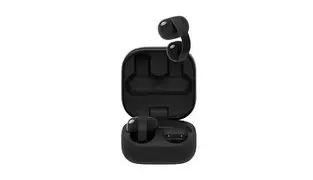
At first contact, users typically notice three things: the case’s size and hinge feel, the earbuds’ finish and build, and the magnets that guide the earbuds into the case. Ear A’s general impression is that it is designed for repeated daily handling—opening the case dozens of times, slipping it into a jeans pocket, and using it as a “grab-and-go” audio tool rather than a delicate gadget.
Controls are another early tell. If the earbuds rely on touch controls, the surface area and responsiveness matter. If they use physical buttons, pressure and click feel matter. Buyers who frequently adjust volume, skip tracks, or toggle noise control without pulling out a phone should pay close attention to how intuitive the controls are within the first few sessions.
Design and Comfort: The “Can You Wear Them All Day?” Test
Comfort is often the deciding factor for truly wireless earbuds. A great-sounding earbud that causes pressure, itching, or hotspot fatigue rarely survives a return window. Ear A’s first-look comfort profile can be evaluated through a practical set of tests: 30 minutes at a desk, a brisk walk outdoors, and a longer stretch of one to two hours.
Fit, seal, and stability
Most buyers care about a fit that feels secure without being intrusive. A stable fit reduces the need for frequent readjustments, which can be especially annoying when using touch controls. With Ear A, the goal should be a seal that stays consistent when:
- Talking or chewing (jaw movement can break the seal)
- Turning the head quickly (commuting and street crossing)
- Walking fast or jogging lightly (fitness use)
In early impressions, a consistent seal tends to translate into a more reliable bass response and a more stable stereo image. If one side feels looser than the other, it’s usually a tip-size mismatch rather than a flawed earbud—many users end up with different tip sizes for left and right.
Pressure management and long sessions
Earbuds that create a tight seal can sometimes produce a sensation of pressure, especially when active noise control is enabled. In a first-week assessment, buyers should try Ear A both with any noise control features on and off during longer sessions. A comfortable pair should feel “present but not demanding,” allowing listening during work, study, or travel without constant awareness of the hardware.
Case practicality: pocket, bag, and desk
The case is part of the product. People who commute often want a case that is pocket-friendly and easy to open with one hand. People who travel want a case that is unlikely to pop open in a bag. Office users want a case that sits neatly on a desk and makes it easy to drop the earbuds in between calls.
In first impressions, the key question is whether the case feels like a tool that supports the habit of using earbuds all day—quick in, quick out, and no fiddly alignment required.
Setup and Daily Use: Pairing, Switching Devices, and Controls
In 2026, many buyers use earbuds across at least two devices: a phone and a laptop. Some add a tablet, a handheld gaming device, or a work phone. Ear A’s value in daily life depends heavily on how smoothly it pairs, reconnects, and switches context.
Looking for the best Audio & Headphones deals on Amazon?
See Deals →Initial pairing and reconnect behavior
Buyers should look for a setup flow that is quick and predictable: open the case, enter pairing mode, connect, and then have the earbuds reconnect reliably the next time they are used. The small frustrations—having to forget the device and re-pair, audio connecting to the wrong device, or one earbud failing to connect—tend to matter more than small differences in sound signature for many mainstream listeners.
Controls: learning curve and accidental touches
Ear A’s first-look usability is strongly influenced by how controls behave in real-world scenarios:
- During commuting: Can the user pause audio quickly when an announcement plays or when ordering coffee?
- During workouts: Do taps register with sweaty hands, and do accidental touches happen when adjusting fit?
- During calls: Can the user mute or end a call without pulling out a phone?
Touch controls can feel modern and flexible, but they must balance sensitivity with stability. Physical buttons can be more reliable but sometimes create pressure in the ear when pressed. In a first impression, what matters is whether the user can build muscle memory quickly and avoid unintended actions.
App features (if available) and practical impact
Many earbuds now offer a companion app with EQ, control customization, firmware updates, and sometimes hearing-related features. In a first look, app value is less about the number of toggles and more about whether the app enables meaningful tuning and stability improvements. Firmware updates can be especially important for improving Bluetooth reliability, multipoint behavior, or microphone processing over time.
Sound Impressions: What It’s Like to Listen
Sound quality is personal, but buyers tend to share consistent preferences: clear vocals, controlled bass that doesn’t overwhelm, and a treble response that adds detail without fatigue. Ear A’s early listening impressions can be framed around practical use cases rather than abstract audio jargon.
Music listening: bass, vocals, and fatigue
In pop, hip-hop, and electronic music, buyers typically want bass presence without boominess. A good first impression is bass that feels full at moderate volume, stays composed on busy passages, and doesn’t smear the midrange. Vocals—especially in podcasts, singer-songwriter tracks, and acoustic music—should remain forward enough to feel intelligible, even in noisy environments.
Treble is where many earbuds either shine or become tiring. A balanced tuning offers enough sparkle for cymbals and ambience while avoiding harshness on “S” sounds. For listeners who spend hours in earbuds, low fatigue often matters more than maximum detail.
Podcasts and audiobooks: the intelligibility test
Spoken-word content is a revealing benchmark because it exposes midrange clarity and the earbud’s ability to keep voices crisp without needing high volume. For commuters or students, the ideal experience is being able to understand speech at safe volumes while walking near traffic or sitting on public transit.
Spatial cues and imaging
Truly wireless earbuds are not trying to replace full-size headphones, but they can still offer a sense of space. In early impressions, buyers should evaluate whether instruments feel separated or crowded. This matters not only for music, but also for gaming and movie watching on a tablet—where dialogue clarity and sound placement affect enjoyment.
Noise Control and Isolation: Commuting and Office Reality
Whether Ear A includes active noise cancellation, transparency, or both, the real question is how these features behave in the environments people actually use: trains, buses, city sidewalks, open offices, and home spaces with appliances running.
Passive isolation: the foundation
Even before any active features, the ear tip seal provides passive isolation. A good seal reduces low-level background noise and improves bass. If Ear A feels like it struggles to block noise, the first fix is almost always trying a different tip size or material style. People with smaller ears often benefit from smaller tips that still maintain a seal; people with wider ear canals may need larger tips to prevent gradual loosening during walking.
Transparency mode: awareness without harshness
Transparency is crucial for safety and convenience—hearing bike bells, crossing signals, or conversations without removing the earbuds. What buyers typically care about is whether transparency sounds natural or artificial, and whether it amplifies harsh sounds (like clinking dishes) too aggressively. A strong first impression is a mode that keeps voices clear and surroundings present without introducing hiss or an overly “digital” tone.
Wind and outdoor behavior
Outdoor performance is often overlooked in reviews, but it matters to runners and walkers. Wind noise can overwhelm microphones and ruin transparency. In the first week, users should test Ear A on a breezy day to see whether it remains usable for calls and whether awareness mode becomes unpleasant.
Call Quality and Conferencing: The Workday Test
For many buyers, earbuds are a work accessory. That means microphone clarity, connection stability, and comfort during long calls are not optional. Ear A’s first-look call performance should be judged in two common scenarios: a quiet room and a noisy environment (street noise, café ambience, or office chatter).
Shop the latest Audio & Headphones picks on Amazon.
View Offers →Voice clarity and consistency
Most people want a voice signal that is clear, not robotic, and consistent as they turn their head or walk. The biggest early indicator is whether the earbuds keep the voice present without aggressively gating or cutting off syllables. If the earbuds rely on noise suppression, it should reduce background sounds without making the speaker sound distant.
Multipoint and device switching for meetings
Switching between a phone call and a laptop meeting is a daily reality. In first impressions, buyers should confirm whether Ear A can handle:
- Taking a phone call while connected to a laptop
- Returning to laptop audio after the call ends without manual re-pairing
- Maintaining stable audio without frequent dropouts
Even if these behaviors depend on device compatibility, the key is whether the experience feels dependable enough for work use.
Battery, Charging, and Practical Endurance
Battery claims are common; what matters is practical endurance. Buyers typically care less about headline hours and more about whether the earbuds can handle a normal day: a morning commute, a few calls, a gym session, and some evening listening without anxiety.
What to look for in real use
In the first week, a helpful approach is to track behavior rather than numbers:
- Drain consistency: Does one earbud drain much faster than the other?
- Quick top-ups: Does a short case charge meaningfully extend use for last-minute errands?
- Case habits: Does the case encourage easy “dock and charge” behavior between sessions?
If Ear A supports fast charging, it can be especially valuable for travelers or anyone who forgets to charge overnight. If it supports wireless charging, that can simplify the “drop it on a pad” routine, though it’s not essential for everyone.
Pros & Cons
Pros
- Compact, everyday-friendly form factor that suits commuting and desk use.
- Comfort-focused design that can work well for long listening sessions with the right ear tips.
- Clear, practical tuning aimed at both music and spoken audio.
- Useful noise management features (when present) that support real-world environments like offices and sidewalks.
- Modern usability expectations such as straightforward pairing and predictable reconnection behavior.
Cons
- Fit remains highly individual; some users may need time and experimentation with tips for the best seal.
- Touch/gesture controls can be a learning curve for users who prefer physical buttons.
- Outdoor wind handling varies depending on environment and how the earbuds’ microphones process gusts.
- Maximum performance depends on good setup (firmware updates, app configuration, and device compatibility).
Comparison Table: Where Ear A Typically Sits Among Common Alternatives
A quick comparison can help clarify what Ear A is trying to deliver. Since buyers often choose between a few familiar categories, the table below frames Ear A against typical market options rather than focusing on a specific competing model.
| Feature Buyers Care About | Ear A Truly Wireless (Typical First Impression) | Budget TWS Earbuds | Premium Flagship TWS |
|---|---|---|---|
| Everyday comfort | Designed to be worn for long stretches; fit depends on tip choice | Can be comfortable, but shape/tips may be limited | Often excellent ergonomics with refined pressure management |
| Sound for music + podcasts | Balanced, practical tuning that supports spoken clarity | Often bass-heavy or uneven; can struggle with vocal detail | More refined tuning, detail retrieval, and EQ options |
| Noise control | Useful in daily environments when seal is solid | Usually limited; relies mostly on passive isolation | Stronger suppression and more natural transparency |
| Call quality | Good for typical calls; best in moderate noise | Can be inconsistent, especially outdoors | Often best-in-class noise suppression and voice processing |
| Device switching | Meets modern expectations; results depend on devices | Often basic, sometimes fiddly | Usually smoother multipoint/ecosystem handoff |
| Value proposition | Targets the “most-used features” sweet spot | Lowest cost; compromises are more noticeable | Highest performance; higher cost for diminishing returns |
Buying Guide: Who Should Consider Ear A (and Who Might Not)
Ear A’s first impressions suggest an emphasis on modern baseline performance: comfort, everyday sound, and practicality. The best buying decisions come from matching product strengths to real habits.
Ear A is a strong fit for:
- Commuters who want a compact set of earbuds that can handle trains, buses, and walking while keeping vocals clear.
- Hybrid workers and students who move between laptop audio, calls, and focus music throughout the day.
- Casual fitness users who want stability for walking, gym sessions, and light runs, assuming the chosen tips maintain a secure seal.
- Podcast and audiobook listeners who prioritize intelligibility and low listening fatigue over maximum bass impact.
Potentially consider alternatives if:
- Call quality in very noisy places is the top priority (for example, frequent calls on windy streets or in loud cafés), where premium models can offer more advanced processing.
- Maximum active noise cancellation is required for frequent flights or extremely loud commutes; top-tier earbuds may suppress low-frequency engine rumble more effectively.
- Highly specific sound preferences are non-negotiable—such as very heavy bass or a particularly bright, analytical treble—unless the companion app offers EQ that can reliably achieve that target without distortion.
What to check in the first week of ownership
To ensure Ear A is a good match, buyers should run a short “real-life checklist” early, while exchanges are still easy:
- Seal test: Try at least two tip sizes and confirm bass stays consistent when walking.
- Comfort test: Wear for 60–90 minutes to check for pressure points or itching.
- Commute test: Use outdoors and on transit; confirm controls are usable and isolation is sufficient.
- Call test: Make a short call indoors and outdoors; ask the other person how the voice sounds.
- Device test: Use both phone and laptop; confirm reconnect behavior matches daily needs.
Small setup tips that often improve results
Many earbud complaints are solvable with minor adjustments. In early use, the most effective steps usually include:
- Update firmware if a companion app is available, as early firmware often improves stability.
- Customize controls to prioritize the actions used most (pause/play, transparency, volume, call control).
- Prioritize fit before judging sound—an imperfect seal can make any earbud seem weak or tinny.
Conclusion
Ear A Truly Wireless makes a strong first impression as a practical, daily-use pair of earbuds—built around the realities of modern listening: commuting, calls, and casual music sessions that happen in short bursts throughout the day. The unboxing and initial handling suggest a focus on convenience and repeat use, while early comfort and sound impressions point toward a tuning and ergonomics that aim to serve both music and spoken audio without demanding constant adjustments.
As with any truly wireless model, the deciding factor is how well it fits the individual ear and routine. Buyers who prioritize comfort, clear everyday sound, and straightforward usability are likely to find Ear A aligns with what most people actually need. Those who require top-tier noise suppression or consistently excellent call performance in the harshest environments may still want to compare with premium alternatives—but for many, Ear A’s first-look experience lands in the sweet spot where features feel relevant, not excessive.