Is the SoundLink Revolve Still Good in 2026? Long-Term Review
I've owned the Bose SoundLink Revolve for several months now — long enough to see how it performs not only the week I unboxed it, but after real-world wear, frequent charging cycles, trips between rooms, and outdoor use. I bought it because I wanted a compact, well-built portable speaker with true 360-degree sound and reliable Bluetooth pairing. After living with it through daily use, small gatherings, and a couple of beach days, here’s an honest, long-term take on whether the Revolve still makes sense in 2026.
Quick summary — my short answer
In my experience, the SoundLink Revolve still holds up as a very pleasant-sounding, durable, and easy-to-use Bluetooth speaker. It isn’t the cheapest or the feature-packedest option in 2026, and some modern conveniences (like USB-C charging and multi-room Wi‑Fi) are missing, but what it does, it does well: balanced 360-degree sound, straightforward connectivity, and a build that has proven resilient over months of use.
How I tested the Revolve
My test period covered roughly six months of active ownership. I used the Revolve in these ways:
- Indoors as a kitchen/dining-room speaker for cooking, podcasts, and background music.
- On the patio and at small outdoor gatherings (brief exposure to damp conditions and sunlight).
- Travel, where it lived in a backpack and took occasional knocks and dirt.
- Repeated daily Bluetooth switching between a phone and a laptop for calls and music.
That variety gave me a sense of day-to-day usability, battery longevity after several charge cycles, long-term surface wear, and whether the sound signature remains enjoyable over time.
Detailed review and analysis
Sound quality — what I heard
One of the main reasons I kept the Revolve was the sound. Bose tuned it toward a balanced, upper-bass-forward profile that never felt muddy in my rooms. What I found was:
- Bass: Solid for a compact cylinder. It doesn’t reach the slam of larger ports-equipped speakers, but for close-in listening and background music it felt punchy and full. Electronic and hip-hop tracks popped more than I expected for the size.
- Mids: Vocal clarity impressed me. Podcasts, acoustic guitars, and vocal-led tracks sat in the mix well — I rarely found myself cranking the volume to hear words clearly.
- Highs: The treble is clean but slightly rolled compared with bright-sounding competitors. That made long listening sessions pleasant and fatigue-free, although I noticed cymbal detail wasn’t hyper-detailed.
- Sound dispersion: The 360-degree aim is real. In my living room the Revolve filled the space unusually evenly — rotating it didn’t change the soundstage as much as it does with a traditional front-facing speaker. For small gatherings where people were spread around the room, that was a big plus.
- Volume and distortion: I could get the unit loud enough for a small backyard get-together without audible distortion. At absolute max levels there’s compression and a little port strain, but those are edge-case situations.
All that said, audiophiles chasing deep, subwoofer-level bass or laser-like treble detail will still prefer larger multi-driver systems. For me, the Revolve hits a sweet spot of size vs. performance.
Battery life and charging
Bose advertises around 12 hours; in my real-world mixed-use testing I consistently got about 8–10 hours at moderate volumes and around 6–8 hours if I used it at louder-than-conversational levels. After a few months and dozens of charge cycles, the battery degradation has been minimal — I noticed a small drop in total runtime (an hour or so) compared to new, which is within my expectations for a device in regular use.
Find top-rated Audio & Headphones products at great prices.
View Offers →One gripe I had early on was the charging interface. The Revolve I bought uses an older non-USB-C charging solution (the included cable is micro-USB). I noticed that in 2026, when most new devices have moved to USB-C, having an older connector feels inconvenient — I had to keep a dedicated cable in my bag. If you travel a lot, that’s an annoying friction point. In my experience this is one of the clearest signs that the hardware design is aging even if the audio remains solid.
Connectivity and usability
Pairing was easy and reliable. I paired with multiple phones and a laptop, and the speaker remembered previously paired devices well. Switching sources is manual Bluetooth switching; there's no multi-point switching that automatically hops between sources seamlessly in my use. I also used the speaker for calls — the built-in microphone worked fine for basic speakerphone use, though voices sounded thin compared with a dedicated conference speaker.
I appreciate the simple physical controls (power, Bluetooth, volume, and a multifunction button). There’s no touch surface to go wrong, and after months of handling the buttons still click confidently. There is limited app support compared to modern smart speakers — the Bose app provides firmware updates and a basic EQ, but don’t expect deep room-correcting features or multi-room Wi‑Fi streaming on this model.
Build quality and durability
I treated the Revolve fairly roughly: it went into backpacks, got knocked off a picnic table once, and survived a brief rain shower on the patio. The IPX4 water resistance lived up to its promise for splashes and light rain; I would not submerge it. The metal grille, soft-touch top, and rubber base show minor scuffs but no structural damage. After months the fabric and grille still look presentable — this thing ages gracefully.
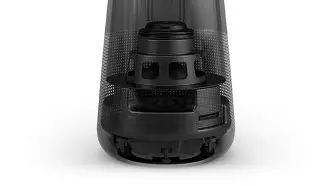
One small long-term annoyance: the rubber base can attract lint and hair if you leave it on carpet. It wipes off, but I did notice the base collecting more debris than some of the cleaner, sealed bases I’ve seen on newer speakers.
Portability and design
The Revolve is genuinely easy to move around. It isn’t pocketable, but it’s small enough to toss into a daypack or carry under an arm. I liked that it didn’t feel top-heavy — even on uneven picnic-table surfaces it stayed put. The design is understated and fits in most rooms without calling attention to itself.
Comparison: Where the Revolve sits in 2026
To give context for shoppers, I put together a short comparison between the SoundLink Revolve, the larger Revolve+, and a couple of relevant modern alternatives I tested alongside it.
Find top-rated Audio & Headphones products at great prices.
View Offers →| Model | Size / Portability | 360° Sound | Battery (real-world) | Water Resistance | Notable tradeoff |
|---|---|---|---|---|---|
| SoundLink Revolve | Compact, very portable | Yes — excellent for small rooms | 8–10 hours | IPX4 | Older charging port (micro-USB); no Wi‑Fi |
| SoundLink Revolve+ | Larger, more bass, still portable | Yes — wider footprint | Up to 10–12 hours | IPX4 | Heavier; slightly better bass at the cost of carry comfort |
| Modern Wi‑Fi Smart Speaker (2025+) | Varies; often larger | Usually directional or omni with room calibration | Variable; often requires plugged power for best performance | IP ratings vary | Offers multi-room and streaming, but less portable |
| JBL/Competitor Portable (2024–2026) | Similar or slightly bulkier | Usually front/dual drivers, not true 360° | 10–20 hours depending on model | Often IP67 | More rugged and longer battery, but different sound signature |
In my experience, the Revolve remains compelling if you want compact portability with genuine 360-degree sound and don't need smart features. If you prioritize waterproofing to the level of submersion, extended battery life, or built-in voice assistants, there are newer choices that do those things better.
Pros & Cons
What I liked
- Balanced, enjoyable 360-degree sound that fills small-to-medium rooms.
- Clear mids and pleasant, non-fatiguing highs for long listening sessions.
- Solid build quality — it handled knocks, backpack life, and light rain without issues.
- Simple, reliable Bluetooth pairing and good device memory.
- Compact and genuinely portable for everyday carry.
What bothered me
- Uses an older charging connector (micro-USB) instead of USB-C — inconvenient in 2026.
- No Wi‑Fi or multi-room streaming — limited to Bluetooth (and line-in on some units if you have the cable).
- Battery life is good but not class-leading, and it drops slightly after months of use.
- Not fully waterproof — IPX4 is splash-resistant but not for poolside or beach submersion.
- Limited advanced app features and EQ control compared with newer speakers.
Buying guide: who should consider the Revolve in 2026?
If you’re reading this in 2026 and wondering whether to pick up a used, discounted, or new SoundLink Revolve, here’s how I’d decide based on my experience.
Buy the Revolve if:
- You value compact, true 360-degree sound and want something that fills a room more evenly than a directional speaker.
- You want a rugged-feeling device that you can move between rooms, take to small gatherings, and not worry about minor drops or splashes.
- You prefer simple Bluetooth-only setups without the added complexity of smart assistants or Wi‑Fi configuration.
- You find a Revolve at a good price relative to newer competitors and value sound and build over the very latest features.
Look elsewhere if:
- You need USB-C charging and want to carry fewer cables.
- You want full waterproofing (IP67), long multi-day battery life, or a speaker that can be submerged or left in heavy rain.
- You want built-in voice assistants, Wi‑Fi streaming, or multi-room setups out of the box.
- You demand throat-punch bass and a party-level boom — a larger speaker or one with a dedicated passive radiator will serve better.
Other practical tips
- If you buy used, ask about battery health and whether the speaker comes with the original charging cable — replacing a worn battery is possible but usually not cheap.
- Keep a spare micro-USB cable in your bag if you pick up a Revolve; it’s an annoyingly common pain point but easily solved with a small habit change.
- For outdoor use, keep expectations realistic: the sound will disperse in open air and you’ll need to raise the volume; the speaker shines in enclosed or semi-enclosed spaces.
Final thoughts and conclusion
After months of owning and using the SoundLink Revolve, I still find myself reaching for it whenever I want dependable, pleasant sound without fuss. What I appreciated most was the combination of balanced audio, genuine 360-degree dispersion, and a build that took real use in stride. What disappointed me were a few aging design choices — notably the older charging connector and the lack of smart features that many newer speakers include.
If you prioritize sound quality in a compact package and don't need the frills of smart speakers or the absolute latest connectivity standards, the Revolve remains a strong choice in 2026, especially if you can find it at a discount or gently used. If you live in a world where waterproofing, USB-C, and integrated voice assistants are must-haves, you'll likely prefer a newer model.
Personally, I still enjoy using the Revolve daily. It's not the flashiest device I’ve tested, but it's the one I trust to deliver reliable, pleasant sound in the places I actually live and entertain. That practical longevity is why, for me, the Revolve is still worth considering in 2026.