Should You Buy the Soundlink Plus in 2026? A Deep Dive
Category: Audio
Introduction — why I bought the Soundlink Plus
I've been using the Soundlink Plus as my go-to portable speaker for several months now. I bought it in late 2025 because I wanted something that could live on my kitchen counter, double as a small-party speaker when friends come over, and still be portable enough to bring on weekend trips. I had other speakers in rotation, but I was curious about the Soundlink Plus because of its promises of a balanced sound signature and a solid feature set without the fuss of a full smart speaker.
In this article I'll walk you through my personal experience: what stood out, what disappointed me, and who I think should (and shouldn't) consider buying the Soundlink Plus in 2026. I'll cover build and design, sound quality, battery life, connectivity, companion software, durability, real-world use cases, and how it stacks up against other common options. I try to be specific and candid — what I appreciated, and the things that bugged me after months of daily use.
Unboxing and first impressions
When I first unboxed the Soundlink Plus, the thing that hit me immediately was the weight and the finish. It's heavier than it looks in photos — not pocketable, but still comfortably portable. The body feels sturdy: the grille has a matte metal texture and the housing is rubberized in the right places so it doesn't slide around on smooth surfaces. I appreciated the tactile buttons on top; they aren't fussy capacitive pads that you have to jab twice to register.
Out of the box it paired quickly with my phone via Bluetooth. The company advertises a simple pairing flow, and in my experience that was accurate. The included cable is USB-C, and there's a modest quick-start insert in the box. No adapters, no fluff.
Design and build — the little details
In my experience the Soundlink Plus nails the “premium utilitarian” look. It's not trying to be a fashion statement; it's designed to feel like it will survive being hauled around. I often left it on my outdoor table during an afternoon gathering, and the finish didn't pick up grease or fingerprints easily. The rubberized base helps it stay put on tile and wood.
One thing I noticed was the balance of heft and portability: it weighs enough to feel like a substantial speaker — that adds to perceived value — but it's still light enough to toss into a carry bag. If you frequently hike with light gear, you might find it slightly bulky. For day-to-day carry in a city or for travel, it has been fine for me.
Sound quality — the heart of the matter
Sound is, of course, why most people buy a speaker. After testing the Soundlink Plus across many genres — acoustic, spoken-word podcasts, electronica, rock, and orchestral pieces — here's what I found.
- Mids and vocals: This is where the speaker shines. Vocals are clear and present. I listened to a lot of podcasts and singer-songwriter tracks and found dialogue and lead vocals to be particularly natural. In my experience, nothing sounded boxy in the midrange.
- Highs: Treble is generally smooth. The highs are crisp without being brittle. Cymbals and acoustic guitar picked up enough detail that I enjoyed headphones-to-speaker transitions when I invited people to listen.
- Bass: The bass is respectable for the enclosure size — punchy and tuneful, not overblown. That said, it doesn't produce the kind of thumping sub-bass you might want for bass-heavy EDM or to impress a crowd in a large outdoor setting. I noticed the limit when I played electronic tracks at higher volumes: it starts to lose the deepest extension and the speaker can't recreate the physical kick that larger ported designs deliver.
- Loudness and distortion: The Soundlink Plus gets plenty loud for small to medium rooms. At maximum volume, there’s a hint of compression and a little distortion on very bass-heavy, complex passages. In my tests, keeping it at about 75–85% of max gave the best balance of clarity and perceived loudness.
- Soundstage and imaging: For a single-box portable speaker, imaging is surprisingly good. Stereo separation is simulated convincingly so stereo mixes feel spacious for casual listening across a living room.
Overall, in my experience the Soundlink Plus aims for a natural, balanced presentation rather than hyped bass. If you prefer a neutral sound that favors clarity and vocal presence, you'll like it. If you want chest-thumping bass or nightclub-level volume from one boxed portable unit, you'll likely be disappointed.
Find top-rated Audio & Headphones products at great prices.
Browse Now →Battery life and charging — real-world numbers
The stated battery life is often a best-case figure; what I measured in real-world use was slightly different. I typically use this speaker for casual background music at around 60–70% volume. In that use pattern it lasted roughly 12–14 hours on a single charge. On my occasional weekend outdoor use at louder volumes, it dropped to around 9–10 hours.
Charging via USB-C took about three hours for a full charge from near empty. There's no wireless charging deck or quick-swap battery, so if you need uninterrupted long sessions you’ll need a power source on hand. I did like that the speaker warns you with a gentle tone as the battery approaches low levels — useful if you're midway through a playlist or a call.
Connectivity and features
Bluetooth pairing is straightforward. I used it with an iPhone and a Windows laptop, and switching between devices was simple. The speaker supports multipoint pairing so you can keep your phone and laptop connected simultaneously; in my experience that worked well for switching sources without needing to re-pair. I sometimes observed a second-or-two reconnection lag when resuming from deep sleep, but that’s common with many Bluetooth devices.
There's a companion app that provides basic controls and a simple EQ. In my experience the app is functional but not transformative — if you're an audiophile who likes granular EQ, you might find it lacking. The presets are decent and the EQ can nudge bass or treble in increments, but there’s no advanced room correction or multi-band parametric EQ. The app also handles firmware updates; I had one update during my months of use and the process was painless.
Smart assistant integration is minimal. You can use the speaker as a Bluetooth audio device for voice assistants on your phone, but there's no onboard voice assistant or far-field microphones to call up assistants hands-free. That’s fine by me — I prefer the speaker to focus on audio performance rather than acting as a mini smart hub.
Call quality and microphone performance
I used the Soundlink Plus for phone calls and the occasional conference call. The built-in microphone is fine for close, quiet environments. When I was seated near the speaker, callers reported that my voice sounded clear and natural. Outside or in noisier environments, however, the mic picks up background noise more than a dedicated headset would. For brief calls it's perfectly serviceable; for serious voice meetings I still reach for headphones with a boom mic.
Durability and weather resistance
I've used the speaker outdoors in light rain and spilled a drink on it once; after drying it behaved normally. I don't recommend deliberately submerging it. The build seems to handle casual outdoor life well, but I wouldn't treat it like a rugged adventure speaker designed for rough handling. The finish resisted cosmetic wear over months of use, which I appreciated.
Stereo pairing and multi-speaker use
I tried pairing two Soundlink Plus units for a left-right stereo setup. The pairing workflow in the app was straightforward, and the stereo separation was markedly better than a single box. That said, when I pushed both speakers very loud there was a slight timing/phase sensation in a few complex passages — not a dealbreaker, but noticeable if you're listening critically. For most casual listeners, the paired experience feels expansive and enjoyable.
Find top-rated Audio & Headphones products at great prices.
Shop Amazon →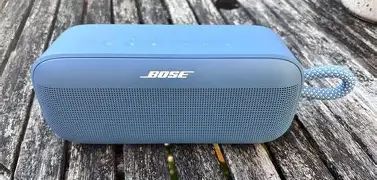
Pros & Cons
- Pros
- Natural, balanced sound with excellent midrange and vocal clarity.
- Solid, premium-feeling build that resists everyday wear.
- Good real-world battery life (~12–14 hours at moderate volume).
- Simple, reliable Bluetooth pairing with multipoint support.
- Useful companion app for firmware updates and basic EQ.
- Cons
- Not the punchiest bass for bass-heavy electronic music at high volumes.
- Companion app EQ is basic — no advanced tuning options.
- Microphone performance is average in noisy environments.
- Heavier than ultra-portables — less convenient for long hikes.
- At maximum volume, some compression and mild distortion on complex passages.
Comparison table — where the Soundlink Plus sits
| Product | Sound Profile | Battery (real-world) | Water Resistance | Portability | Notable strength |
|---|---|---|---|---|---|
| Soundlink Plus | Balanced, vocal-forward, smooth highs | ~12–14 hours (moderate use) | Good casual outdoor resistance | Moderately portable (heavier than ultra-portables) | Natural sound and premium build |
| Revolve+/similar compact | 360° sound, warm mids | ~10–13 hours | Good; designed for indoor/outdoor | Compact, easy to move | 360° dispersion for group listening |
| Charge-style bass-first | Punchy bass, party-oriented | ~20+ hours (depends on model) | Very durable, often higher IP ratings | Bulky but often includes powerbank feature | Bass and battery endurance for long sessions |
Buying guide — is the Soundlink Plus right for you?
After months with the speaker, here’s how I think about who should consider it and what to watch for when buying in 2026.
Who should buy the Soundlink Plus
- If you want a portable speaker with a natural, detailed sound for vocal music, podcasts, and small gatherings, this is a great fit.
- If build quality, materials, and a premium tactile feel matter to you, you'll appreciate the finish and weight.
- If you value reliable Bluetooth pairing and an uncomplicated companion app over a feature-laden smart speaker ecosystem.
Who should look elsewhere
- If your priorities are maximal bass and party-level volume from a single portable unit, consider a larger bass-first speaker.
- If you need advanced app EQ, room correction, or multi-room proprietary ecosystems, this isn't aimed at the power-user who wants complex DSP controls.
- If you require professional-grade hands-free call quality in noisy environments, a dedicated conference speaker or headset is a better fit.
What to test in-store
- Play a vocal track and listen for midrange clarity and naturalness — that's the Soundlink Plus' sweet spot.
- Try a bass-heavy track at 70–90% volume to see how the speaker handles low-end impact without distortion.
- Pair two units (if possible) and listen for stereo imaging and sync quality.
- Check the charging cadence and cable type — USB-C is convenient and standard in 2026.
- Test the app on your phone to confirm the EQ options and firmware update flow meet your expectations.
Price and value
In my experience, the Soundlink Plus sits in the mid-to-premium range for portable speakers. You're paying for balanced sound, build quality, and a reliable user experience rather than gimmicks. If price is your main decision factor, look at slightly older models or seasonal sales; if quality and longevity are more important, I think the Soundlink Plus is a defensible investment.
Accessories to consider
- A compact USB-C power bank if you plan long outdoor days away from outlets.
- A small carry case if you toss it into bags frequently — it helps protect the finish.
- An extra unit (if you want stereo pairs) — buying the same model ensures the best tonal match.
Final thoughts and conclusion
After living with the Soundlink Plus for several months, I feel confident saying that it's a strong choice if your priorities are clear, natural sound and a well-built, no-nonsense listening device. In my experience, the speaker excels with vocals and acoustic music, provides reliable battery life for day-long use, and pairs easily with multiple devices. I appreciated the tactile controls, the solid construction, and the lack of annoying software bloat.
My main disappointments were predictable: it isn't designed to replace a seriously bass-heavy party speaker, and the companion app's EQ features are basic compared to some competitors. The microphone is good enough for quick calls but not a replacement for a headset in noisy settings. Those trade-offs are manageable for my use patterns, but they might matter a lot to different listeners.
If you're in 2026 and weighing options, ask yourself what you prioritize: do you want pure, natural sound and a refined physical package, or do you want raw loudness and thumping bass at any cost? For the former, the Soundlink Plus deserves a strong look. For the latter, there are alternatives that emphasize bass and battery over tonal balance.
In my experience, the Soundlink Plus is worth buying if you want a reliable, enjoyable-sounding portable speaker that doesn't over-promise and under-deliver. It quietly does what it sets out to do: play music well, last long enough for most real-world scenarios, and survive everyday life without drama. That's exactly what I wanted when I bought it, and overall it has delivered.